Species Guide
Giant Trevally on Poppers: A Complete Tactical Guide
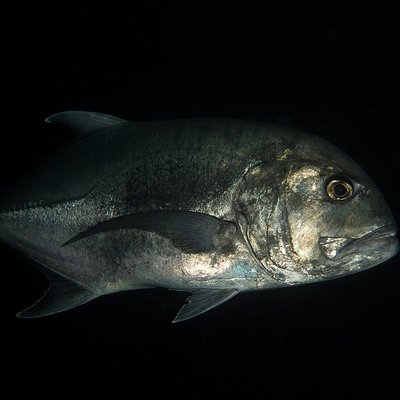
GT popping is the most exciting form of saltwater fishing on the planet. Here's the practical guide: rods, reels, lures, retrieves, timing, and what actually triggers GT to attack.
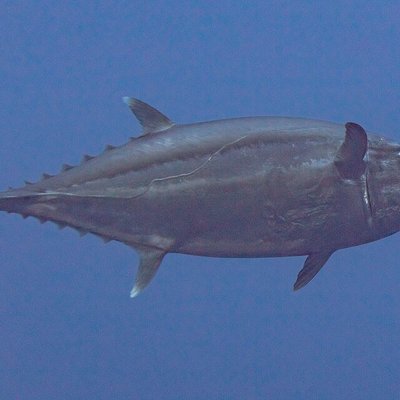
Dogtooth tuna are one of the hardest-fighting fish in the ocean. Here's where to find them, what gear actually stops them, and the technique that produces trophies.
30 April 2026Dogtooth tuna are the fish that ruin tackle. Trophy class is 40kg+. They live in deep water around reef pinnacles, ambush jigs at speed, and run for structure the second they're hooked. Most anglers who hook a serious dogtooth lose it.
Here's the practical guide: where they live, how to find them, and what gear actually stops them.
Gymnosarda unicolor. Despite the name, it's not a true tuna — it's a mackerel-family fish that looks like a tuna with oversized teeth. Trophy specimens push 60kg+. They're the apex predator of Indo-Pacific reef systems.
The teeth give them their name and explain their feeding style — they ambush prey, bite once, and crush. Bite-offs are constant if you don't run wire or heavy leader.
Reef structure. Specifically:
Strong tide. Like GT, they're driven by current. Slack water shuts them off. Outgoing tide pulling bait off a reef edge is prime time.
Dawn and dusk give an edge but dogtooth are willing to feed mid-day if tide and bait are right.
Drop a 250–500g jig to the bottom (or to the depth showing on sonar), then work it back up with sharp, rhythmic lifts. The strike often comes within the first 10 cranks off the bottom.
Speed matters. Dogtooth respond to fast, erratic jig action — much faster than most anglers think.
A more technical approach. Smaller jigs, slower cadence, more emphasis on the jig's flutter on the drop. Effective on pressured fish or in lower-current conditions.
Where legal and available, slow-trolled or drifted live bait over structure produces. But it's less common than jigging on serious trips.
Heavy. Don't bring jigging gear from your snapper trip.
Top picks: Smith CB Masamune, Jigging Master Power Spell, Williamson Vortex.
The first 5 seconds are everything. Hooked dogtooth bolt for the structure they were holding on — a pinnacle, an overhang, a channel wall. If you let them get there, the leader cuts on coral and you lose the fish.
Drag locked down, rod low, pump hard. Once you've moved the fish 10m off the structure, the fight is winnable. Stay above the fish. Don't let it dive back into structure on subsequent runs.
Three reasons:
1. Strength relative to size. Pound-for-pound, dogtooth pull harder than almost any other fish.
2. Structure proximity. They hunt next to gear-destroying reef. There's no open-water fight.
3. Teeth. Even hooked fish can cut leader during the fight if it brushes their jaws wrong.
This is why landing a trophy dogtooth is one of the genuine achievements in saltwater sportfishing.
Yes. They're slow-growing, late-maturing, and easily over-fished. Modern best practice is photograph-and-release for everything except a single fish per trip if you want to eat one. Even then, take a smaller fish — the trophies are breeding stock.
Dogtooth fishing requires destinations with the right structure, depth, and protection. We run dedicated dogtooth-focused trips to Raja Ampat, West Papua, and the Maldives' central atolls. View upcoming expeditions or contact us to discuss a trophy-focused trip.
GT popping is the most exciting form of saltwater fishing on the planet. Here's the practical guide: rods, reels, lures, retrieves, timing, and what actually triggers GT to attack.
The Maldives has one of the most underrated sailfish fisheries in the Indian Ocean. Here's the practical breakdown: when to come, where to fish, and the techniques that actually work.
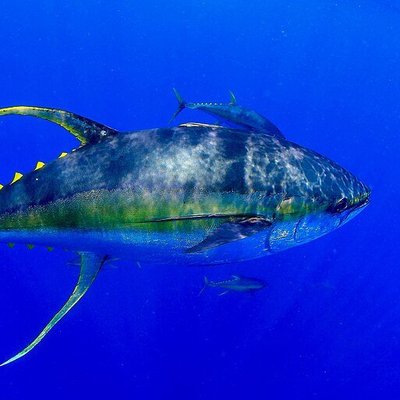
Yellowfin tuna are the bluewater hallmark of the Indian Ocean. Here's where to find them, what tactics work, and what tackle stops a 50kg+ fish in deep water.