A liveaboard fishing trip is one of the most immersive experiences in travel. You're at sea for days, surrounded by other anglers, fishing dawn to dusk in remote waters. For most first-timers, the reality differs significantly from the brochure.
Here's the honest preview.
What is a liveaboard, exactly?
A liveaboard is a fishing-focused vessel where you live, sleep, and eat onboard for the duration of the trip. Typically 5–10 days. The boat moves between fishing zones each night or during midday breaks, maximising your access to remote sites.
Picture a small floating fishing hotel that follows the fish. That's basically it.
The daily rhythm
A typical day looks something like:
- 05:30 — wake, coffee, light breakfast
- 06:00 — board tender boats, head to first session
- 06:30–10:30 — morning fishing session
- 10:30–11:30 — return to mother boat, brunch
- 11:30–14:30 — rest, lure changes, mid-day break
- 14:30–18:30 — afternoon fishing session
- 19:00 — dinner onboard
- 20:00–22:00 — drinks, post-mortem of the day, prep for tomorrow
- 22:00 — sleep
Repeat for the duration. Some trips run more or fewer sessions per day depending on conditions and target species.
What you'll be doing most of the time
Three things:
1. Fishing. Obviously. But the actual ratio is usually:
- 60% casting and retrieving
- 30% running between spots
- 10% fighting fish
The fights are the highlight but they're a small fraction of total time.
2. Talking to other anglers. You'll spend hours discussing technique, gear, past trips, lure choice. For most anglers, this is one of the best parts.
3. Recovering. Eight hours of popping and jigging is genuinely physical. Down time matters more than you'd think.
What's harder than you expect
The physical demands
Popping for GT and jigging for dogtooth are full-body workouts. Your forearms, shoulders, and lower back will feel it. By day 3, most first-timers are stiff and tired.
Coming in cardiovascularly fit and with some shoulder/grip strength preparation makes a real difference.
The mental focus
Eight hours of focused casting and watching your lure requires sustained attention. The fish often hit on the cast you'd given up on. Anglers who zone out miss strikes.
The tropical sun
Equatorial sun for 12-hour days is brutal. Even with full UV clothing, sunscreen, and a hat, you'll feel it. Hydration matters. Sun gloves matter. After-sun gel becomes essential.
Sea sickness potential
Even on calm trips, some anglers feel queasy in the first 24 hours. Strong stomachs aren't immune. Bring stugeron or scopolamine patches; use them prophylactically rather than reactively.
The small living space
You'll share a cabin with another angler unless you've paid the single supplement. Bathroom facilities are functional rather than luxurious. Personal space is limited. Some anglers find this harder than the fishing.
What's easier than you expect
The food
Quality liveaboards feed you well. Three solid meals plus snacks. Variety is decent. You won't lose weight on the trip.
The fishing itself
With quality guides and the right gear, hookups come reasonably often. Landing them is the challenge — but you'll get plenty of shots.
The social side
Most fishing liveaboards attract similar anglers — passionate, experienced, friendly. You'll make friends fast. Many groups become repeat trip companions.
The downtime
The mid-day breaks are longer than you'd expect. You'll have time to rest, nap, talk, swim, snorkel, read.
What nobody tells you
A few realities that don't make the brochure:
Not every day fishes
Weather happens. Tides don't always cooperate. On a 7-day trip, expect 1–2 days that fish below expectations. Adjust your expectations accordingly.
Lure loss is real
Even experienced anglers lose lures. GT runs cut leaders on coral. Stickbaits get bitten off by sharks. Plan to lose 3–6 lures per trip. Bring extras.
Sleep deprivation creeps up
Pre-dawn starts, late dinners, and adrenaline-filled days catch up by day 4–5. Many anglers report feeling drained mid-trip even when fishing is going well.
The crew matters more than the boat
The single biggest determinant of trip quality is the guide team. A good guide with average equipment outperforms a poor guide with great equipment every time. Vet operators based on guide quality, not boat photos.
Sharks are common
Many premium fishing destinations have healthy shark populations. You'll see sharks attack hooked fish. You'll lose fish to sharks. It's part of the ecosystem — and a sign of a healthy fishery — but it surprises first-timers.
Photos take effort
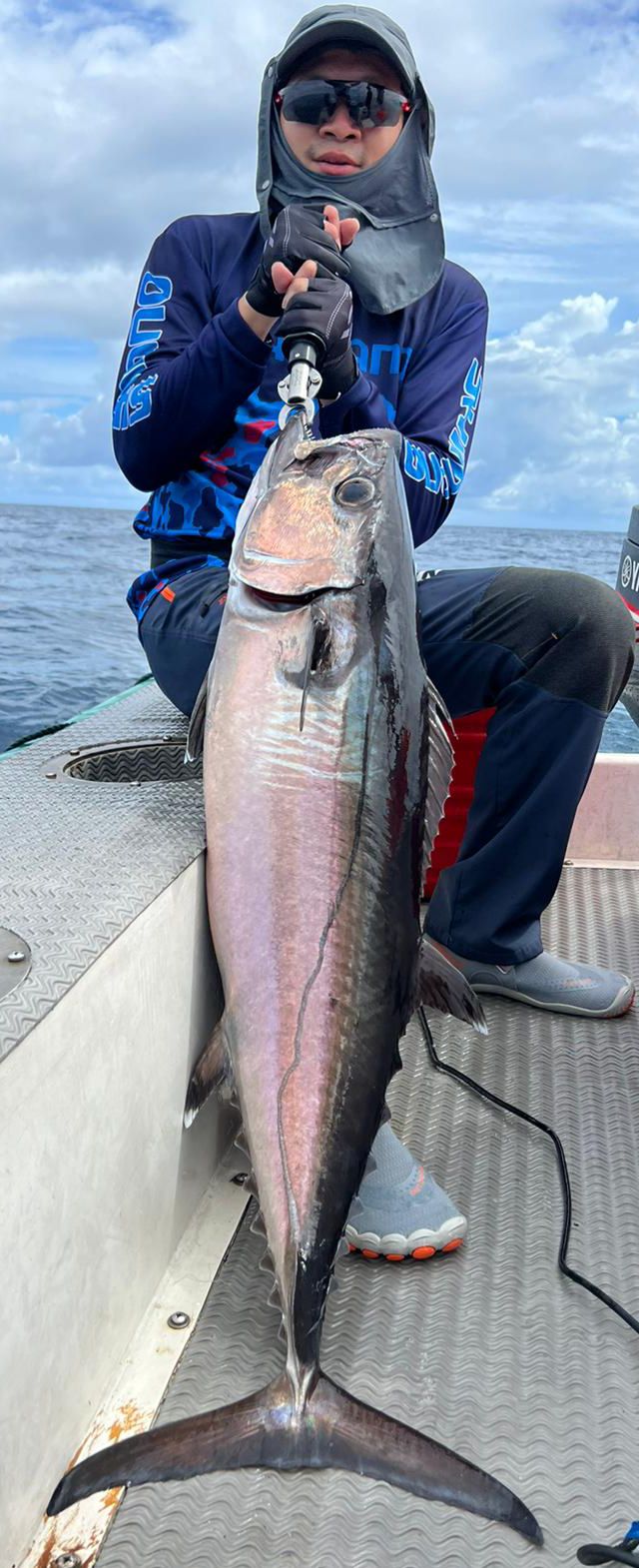
Capturing good fish photos requires planning. Most anglers underestimate this. Bring a GoPro mount for the boat, ask a crew member to take photos, brief them on what you want.
What to bring (the priorities)
If we had to pick the top 5 items first-timers under-prepare for:
1. Electrolyte supplements — dehydration is the silent trip-killer
2. Sun gloves — your hands will burn worse than anywhere
3. Multiple buffs/neck gaiters — one is never enough
4. Sea sickness medication — more than you think you need
5. Spare braid and leader — for the inevitable line failures
(Full packing guide: What to Pack for a 7-Day Liveaboard Fishing Trip)
How to maximise your first trip
A few practical suggestions:
Be honest about your level
A good operator will calibrate guide attention and tackle choice to your level. Don't oversell your experience trying to impress — the result is mismatched gear or technique advice.
Listen to the guides
Local guides have spent years on those specific reefs. Their lure recommendations, retrieve advice, and spot selection are worth more than internet research. Take their input seriously.
Don't fish exhausted
Day 5 with no sleep and aching arms isn't going to produce your best fishing. Take rest sessions when offered. Drink water aggressively.
Take photos but don't lose your trip to your phone
Capture the highlights but don't spend the trip behind a camera. The fishing matters more than the social media content.
Bring quality gear you trust
Equipment failure in remote destinations is harder to fix than at home. Test your reels and rods before you leave. Bring backups for the most critical items.
Should you do it?
If you're a serious angler asking the question, the answer is almost certainly yes. A well-run liveaboard fishing trip is one of the most memorable experiences in travel — physical, immersive, communal, and built around something you genuinely love.
It's not a holiday for everyone. It's a fishing trip. The fishing is the point.
Ready to plan?
We run small-group liveaboard expeditions to Indonesia and the Maldives, sized at 6–8 anglers per trip. View upcoming trips or contact us to plan your first.